



by Arun
Graduate Programme
At National Grid
Graduate Scheme
Turning setbacks into stepping stones : Arun's journey to the graduate programme
When I arrived in the UK in January 2023 to pursue my Master's degree, I thought the biggest challenge would be adapting to a new country.
I was wrong.
Like many international students, I quickly discovered that moving countries is about far more than academics. There were cultural differences, a new way of life, unfamiliar weather, and of course, the accents. Despite studying in English for most of my life, there were moments during those first few months when I genuinely wondered whether British people were speaking an entirely different language.
Outside of university, I took on a part-time role at a supermarket to help support myself financially. While balancing work and studies, I spent much of my free time pursuing professional certifications, networking, and preparing for graduate applications. Like many students nearing graduation, I believed that if I worked hard enough and built a strong CV, securing a graduate role would be straightforward.
After more than 300 applications and countless rejection emails, I learned otherwise.
The process tested me in ways I hadn't expected. Every morning seemed to begin with another rejection notification landing in my inbox. But each rejection taught me something valuable: persistence matters just as much as talent.
Eventually, things started to change.
I wanted to work on projects where the impact was tangible. Projects that would still matter decades from now.
I was fortunate to receive three graduate offers (one of which was with National Grid), whilst also pursuing opportunities outside graduate programmes. Before I had even attended my graduation ceremony, I was working in Canary Wharf, one of London's most recognisable business districts.
But while I enjoyed working in banking, I knew something was missing.
The work was interesting and the opportunities and learning were there every day, yet I found myself increasingly drawn toward engineering and infrastructure.
I wanted to work on projects where the impact was tangible. Projects that would still matter decades from now. And I wanted to work somewhere where I could constantly learn, take on meaningful responsibility, and contribute to something bigger than myself.
That's why I chose National Grid.
For me, the energy sector represents one of the most important challenges of our generation. We are seeing increasing pressure from climate change, growing electricity demand, rapid digitalisation, the emergence of energy-intensive technologies such as AI and data centres, and evolving geopolitical considerations around energy security.
At the same time, more customers than ever want to connect to the grid, while the industry continues to face resource and skills challenges.
When I looked at all of those trends, one thing became clear: the energy transition will define the next few decades.
And sitting at the centre of that transition is National Grid.
Few organisations have such a unique view of the challenges facing the UK's future energy system. Even fewer have the opportunity to actively shape the solutions.
I wanted to be part of that.
So I accepted my National Grid offer and began preparing for my graduate programme.
Then everything changed.
Whilst preparing for my move, I was reminded that my role required a full driving licence before joining. I did everything possible to meet the requirement, booking lessons, travelling for tests, and giving it my absolute best.
Unfortunately, I failed the first test.
National Grid gave me one final opportunity.
I failed the second test too.
Shortly afterwards, I received the news that my offer would have to be withdrawn.
It was one of the most difficult professional moments I have faced.
I had already turned down the other graduate opportunities and resigned from my banking role.
A few weeks later, I passed my driving test. But by then, the opportunity had already passed.
Looking back, that period taught me one of the most important lessons of my life: focus on what you can control.
Instead of dwelling on what had happened, I redirected my energy toward what came next. I secured another role, continued developing my skills, and kept in touch with National Grid's Early Careers team.
Most importantly, I didn't give up.
When applications opened again, I reapplied.
This time, I was successful.
The phone call informing me that I had secured a place on the programme remains one of the most memorable moments of my career.
Fast forward to today, and I couldn't be happier with where I am.
In less than a year, I have had opportunities to visit substations and interconnectors, support major projects, contribute to graduate initiatives, volunteer across the business, and learn from some incredibly talented people.
The best part has been seeing firsthand the scale and complexity of the work that happens behind the scenes to keep the country's energy network running.
Every one of those experiences means more because I know how close I came to missing them.
But what has surprised me most is how supportive and approachable everyone is.
National Grid is a huge organisation working on some incredibly complex projects, but regardless of someone's role or seniority, people are always willing to share their knowledge and help you develop.
I've also been surprised by how much responsibility graduates are trusted with. From contributing to real projects to getting involved in graduate initiatives, volunteering opportunities, and assessment centres, there are far more opportunities available than I expected when I first joined.
If my journey has taught me anything, it's that setbacks aren't always roadblocks. Sometimes they're simply detours that prepare you for where you're meant to be.
And for me, that destination was National Grid.
It’s one of those organisations where every day you can see the link between your work and its impact on society.
My own journey wasn't straightforward. I moved countries, worked part-time while studying, submitted hundreds of applications, changed career paths, lost a graduate opportunity, and then worked my way back.
Because of that experience, I can honestly say that joining National Grid has been worth every challenge along the way.
If you're looking for a career where you'll be constantly learning, working alongside talented people, and helping shape the future of energy, I can't think of a better place.
(…But a quick top tip, if the job description advises you need a driving license…make sure you’ve passed your test in time!)


More Case Studies from National Grid

Electricity Transmission Substation Craftsperson Advanced Apprentice
Level 3 Apprenticeship
By Alyssa

Power System Engineer
Level 4/5 Apprenticeship
By Leo
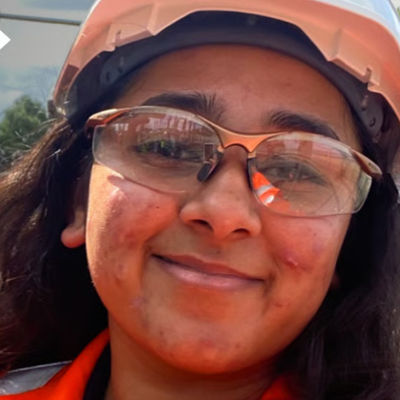
Electrical Power Network Engineers Apprenticeship - Planning
Level 4/5 Apprenticeship
By Amal
Related Case Studies
Explore more case studies from across our platform.

How to stand out when applying for student opportunities
Placement (10 Months+)
By EY

Procurement Higher Apprentice
Level 4/5 Apprenticeship
By Greg
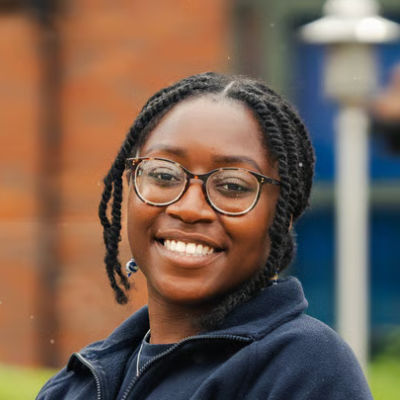
Substation Craftsperson
Level 4/5 Apprenticeship
By Jenn
